
KIDNEY CANCER
Kidney Mass Found on a Scan: Do I Need a Biopsy or Surgery?
From an unexpected finding to an informed plan: understanding scans, biopsy and kidney preservation.
Key takeaways
- A kidney mass is not automatically cancer.
- Biopsy is useful when the result can change management.
- Monitoring and kidney-preserving treatment are options for selected patients.
A kidney mass is not automatically cancer, and finding one does not automatically mean you need an immediate operation or removal of the whole kidney. The next step is to understand whether it is a simple cyst, a more complex cystic lesion or a solid mass, and assess its imaging features alongside your kidney function and overall health. A biopsy is useful in selected situations, but is not necessary before every operation.
My priority is to explain what we know, resolve what remains uncertain and assess whether your kidney can be preserved safely. You can also read my kidney cancer and renal masses guide.
What does “kidney mass” mean?
A mass is an abnormal area seen in or around the kidney. It may be fluid-filled, solid or a mixture of both. Some masses are benign; others are cancerous.
A confidently characterised simple cyst generally does not need cancer treatment. A complex cyst may contain features such as thicker walls, internal divisions or a solid area that need closer assessment. Solid masses also vary: not every solid mass is malignant, and size alone cannot establish the diagnosis.
Which scan is usually needed next?
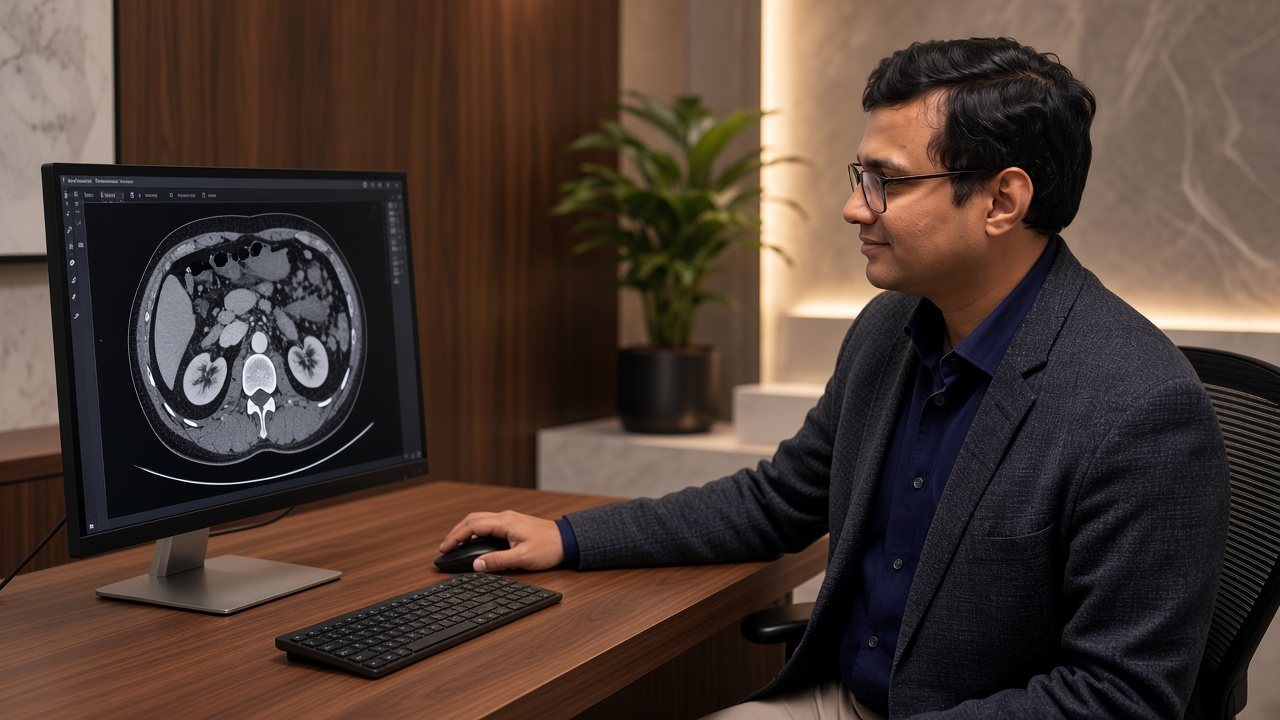
A kidney-focused contrast CT or MRI can help characterise a mass, depending on your circumstances. The scan assesses size, position, blood supply, relationship to nearby structures and whether there are signs of extension beyond the kidney.
“Enhancement” means that part of the mass takes up contrast. This is an important clue, but it is not a diagnosis you should interpret in isolation.
Bring the actual images as well as the report. The images help the surgeon assess the mass's relationship to the kidney's vessels and urine-collecting system. An earlier scan is also useful for comparison.

Tell the team about previous contrast reactions, kidney disease, pregnancy or possible pregnancy. Impaired kidney function does not mean every useful scan is impossible; the safest informative examination needs individual planning.
A PET scan is not routinely the first test for characterising an incidental kidney mass. Additional staging tests are chosen according to the findings and clinical situation.
What does a Bosniak category mean?
Bosniak is a system used to classify cystic kidney masses from detailed imaging. It helps clinicians judge which cysts need no cancer-directed follow-up, which need monitoring and which need a treatment discussion.
A Bosniak label is not the same as a tissue diagnosis. The imaging technique and classification version matter, and management must also consider your health and preferences.
If your report says “complex cyst”, ask whether it has been assigned a Bosniak category and whether further imaging would change the assessment. Do not assume that “cyst” always means harmless or that “complex” always means an operation.
FROM DR. SACHIN“A kidney mass on a scan isn’t automatically cancer, and it doesn’t automatically mean surgery. Bring your scans and reports, and we will understand the finding together before deciding on any treatment.”
— Dr. Sachin Arakere Nataraj
Do I need a kidney biopsy before treatment?
The question that matters is: Would the biopsy result change what we recommend?
A needle biopsy may help when imaging is uncertain, when deciding whether to monitor a selected mass, or when another diagnosis is possible. Tissue diagnosis is generally needed before ablative treatment and before starting systemic cancer treatment when no previous pathology is available.
A biopsy may not be needed when the imaging is sufficiently concerning and surgery would be recommended regardless of the result. In that situation, examining the removed tissue establishes the final diagnosis.
Biopsy has limitations. Sometimes the sample does not provide a clear answer, and a repeat biopsy or another approach is needed. It also cannot describe every part of a tumour with the same certainty as examination of the full surgical specimen. Bleeding and other risks should be discussed.
A cystic mass without a suitable solid component is not usually a good target for biopsy. The decision belongs in a review of the images, not a rule that every mass must or must not be biopsied.
Can a kidney mass be monitored instead of removed?
Active surveillance is an option for selected patients, particularly with small masses when the balance between tumour risk and treatment burden favours monitoring.
It means planned imaging, clinical review and agreed reasons to reconsider treatment. It does not mean ignoring the finding. Growth, changing appearance, symptoms, biopsy information and your preferences may alter the plan.
Age alone does not decide suitability. General health, other illnesses, kidney function, tumour features and the ability to attend follow-up all matter.
If surgery is needed, can the kidney be saved?
Partial nephrectomy removes the tumour while preserving the remaining kidney where this is safe and feasible. Its suitability depends on more than size: position, depth, nearby vessels and the collecting system can make an operation more complex.
Preservation deserves particular attention if you have one functioning kidney or reduced kidney function. However, retaining tissue must be balanced against safe tumour removal and surgical risks. Some cases require radical nephrectomy, which removes the whole kidney.
Read about robotic partial nephrectomy and robotic kidney surgery in Noida. Robotic surgery is an approach, not a guarantee that every kidney can be preserved. Selected masses may also be suitable for ablation rather than surgery.
What should I bring to a specialist consultation?
Bring the scan images, written reports, older scans, recent creatinine or eGFR results, medicine list and details of previous operations. Mention diabetes, high blood pressure, kidney disease and any family history of kidney cancer.
Young age at diagnosis, masses in both kidneys, multiple tumours or a relevant family history may prompt discussion of genetic assessment.
Ask what the most likely diagnosis is, whether biopsy would change the plan, which options are reasonable and how each could affect kidney function. If surgery is recommended, ask why partial or radical nephrectomy is preferred and what might change the intended plan.
Visible blood in urine still needs assessment. Heavy bleeding, inability to pass urine, severe pain, fever or feeling faint require prompt care rather than waiting for a routine consultation.
What are the short answers to common questions?
Can kidney cancer occur without pain?
Yes. Lack of pain does not rule it out, and an incidental finding still needs appropriate review.
Will I need dialysis if a kidney tumour is removed?
Not automatically. The risk depends on your existing kidney function, the other kidney and the treatment required. Ask for an individual assessment.
Does a small mass always need surgery?
No. Some can be monitored or treated differently after a careful discussion of the risks and alternatives.
How can we decide the next step together?
For assessment or a second opinion with me at Max Super Speciality Hospital, Noida, prepare your scans and arrange an appointment. The first goal is clarity—not choosing an operation before understanding the mass and both kidneys.
Patient education only; individual diagnosis and treatment require clinical assessment.
Questions to ask your surgeon
- What do the actual scan images suggest?
- Would a biopsy change the recommendation?
- Can my kidney be preserved safely?
- If we monitor, when is the next scan and what would change the plan?

About Dr. Sachin Arakere Nataraj
Uro-Oncologist, Robotic Surgeon and Focal Therapy Surgeon
Max Super Speciality Hospital, Noida · Noida and Delhi NCR
His clinical practice includes kidney and bladder cancer assessment and surgical treatment.
Prepare for a consultation or second opinion →References & further reading
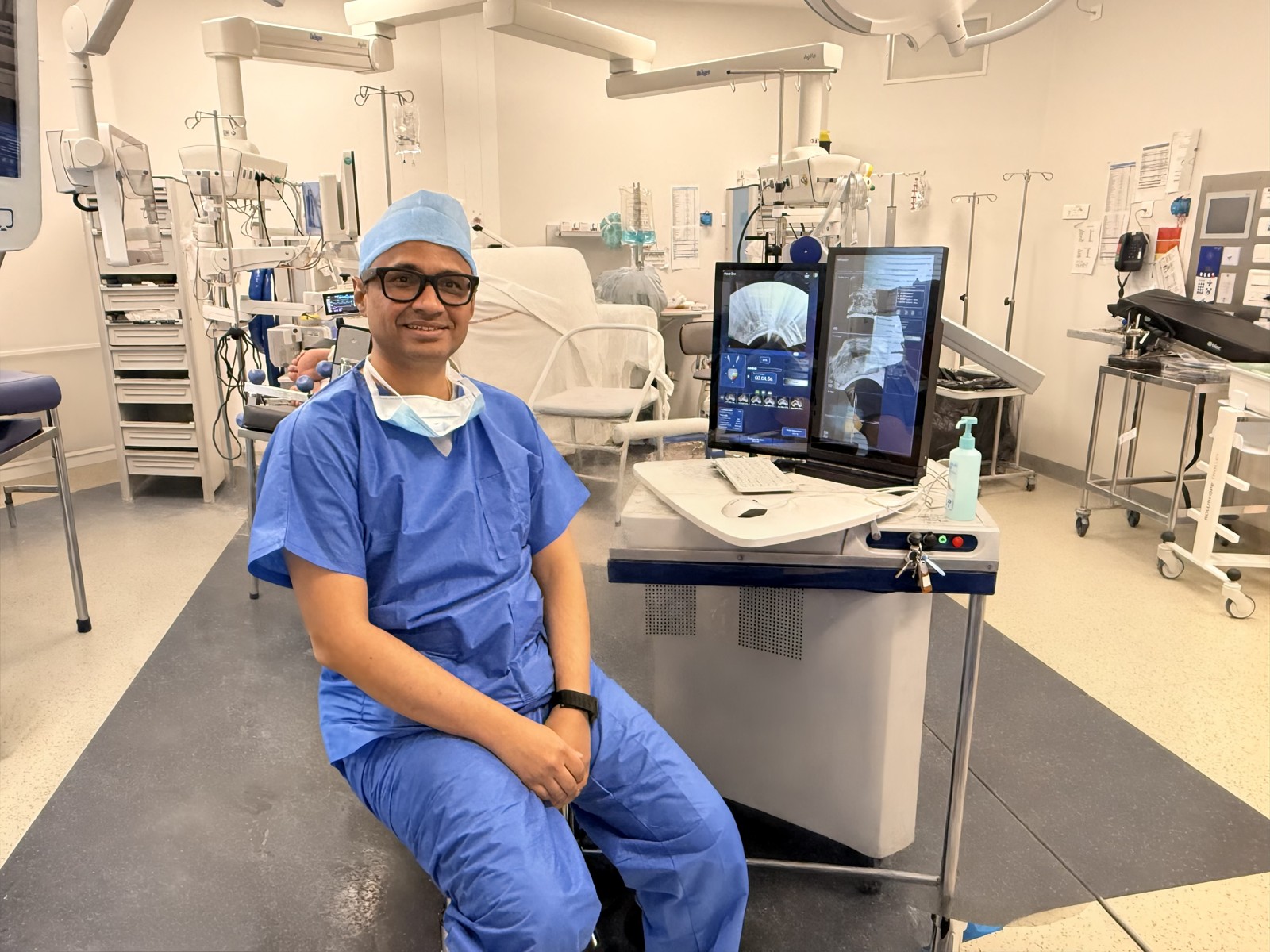
Hero is an AI-generated illustration featuring Dr. Sachin Arakere Nataraj. In-article and author photographs are real, supplied photographs unless labelled as AI-edited.